
Otorinoscope — A rigid medical endoscope used in otolaringology to examine ear, throat, nose.
Otorinoscope — A hard-line medical endoscope used in otolaringology for the examination of the ear, throat, nose. The otornoscope used in endoscopy otolaringology is different from classical. Endoscopy otornoscope and has an ocular to join endoscopy cameras, as well as an endoscopy-connector to connect an endoscopy light source. Visual representation from the body is displayed on a medical monitor.
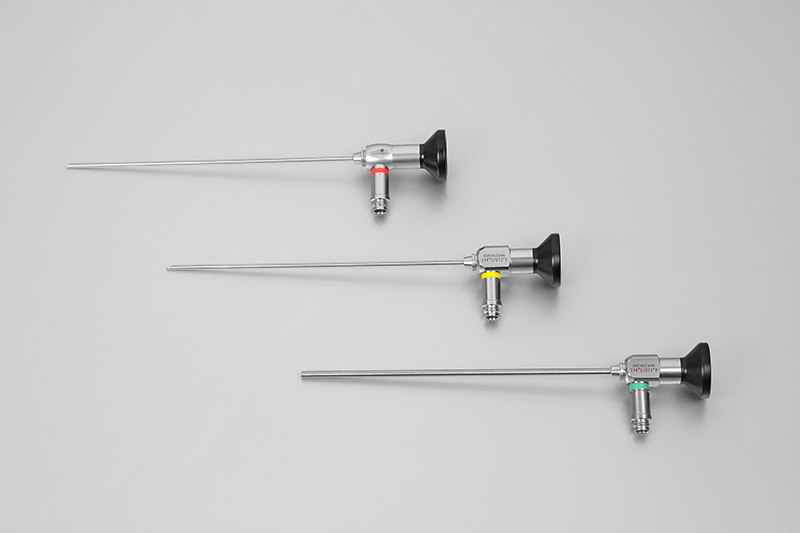
Also, there is a channel in the otorioscope for transmitting light to the test cavity, from the external account source.
Rhinoscopes used for nose, nose, throat.
Otoscopes used for ear research.
These are the technical characteristics of the vehicle 2 Groups differ only in length of the work unit, Rinoscopes have longer work, otoscopes have shorter.
Renoscope can be used as a otoscope, which makes these rigid endoscopys more universal for application in the lore of practice.
Also, the otorioscopes differ by diameter of the work unit: 1.9 mm, 2.7 mm and 4 mm in the direction of observation: 0°, 12°, 30°, 45° and 70°.
Figure.1. Otornoscopes of INGO production Endomedium®
Orinoscope construction
Visually, the otorioscope represents a classic medical hard endoscope with a lens system placed in a metal tube. The proximal end has an ocular, to connect the camera and to display the image on the screen.Also, there is a channel in the otorioscope for transmitting light to the test cavity, from the external account source.
Types of othornoscopes
The orals can be divided into 2 Group:Rhinoscopes used for nose, nose, throat.
Otoscopes used for ear research.
These are the technical characteristics of the vehicle 2 Groups differ only in length of the work unit, Rinoscopes have longer work, otoscopes have shorter.
Renoscope can be used as a otoscope, which makes these rigid endoscopys more universal for application in the lore of practice.
Also, the otorioscopes differ by diameter of the work unit: 1.9 mm, 2.7 mm and 4 mm in the direction of observation: 0°, 12°, 30°, 45° and 70°.
Technical characteristics of the otorioscopes
| Name | Diameter | Angle of the field of vision | Length | FULL HD image support |
|---|---|---|---|---|
|
6000-49, EndoGlance® rhinoscope, 1.9 mm, 0° |
1.9 mm | 0° | 175 mm | |
|
6000-50, Renoscope 1.9 mm 30° EndoGlance® |
1.9 mm | 30° | 175 mm | |
|
6000-46, EndoGlance® rhinoscope, 2.7 mm, 12° |
2.7 mm | 12° | 175 mm | |
|
6100-47, Renoscope 2.7 mm 30° |
2.7 mm | 30° | 175 mm | |
|
6000-47, EndoGlance® rhinoscope, 2.7 mm, 30° |
2.7 mm | 30° | 175 mm | |
|
6000-48, EndoGlance® rhinoscope, 2.7 mm, 70° |
2.7 mm | 70° | 175 mm | |
|
6100-40, Renoscope 4 mm 0° |
4 mm | 0° | 175 mm | |
|
6000-40, EndoGlance® rhinoscope, 4 mm, 0° |
4 mm | 0° | 175 mm | |
|
6000-41, EndoGlance® rhinoscope, 4 mm, 12° |
4 mm | 12° | 175 mm | |
|
6100-42, Renoscope 4 mm 30° |
4 mm | 30° | 175 mm | |
|
6000-42, EndoGlance® rhinoscope, 4 mm, 30° |
4 mm | 30° | 175 mm | |
|
6000-43, EndoGlance® rhinoscope, 4 mm, 45° |
4 mm | 45° | 175 mm | |
|
6100-44, Renoscope 4 mm 70° |
4 mm | 70° | 175 mm | |
|
6000-44, EndoGlance® rhinoscope, 4 mm, 70° |
4 mm | 70° | 175 mm | |
|
6111-043, Otoscope 2.7 mm 0° |
2.7 mm | 0° | 100 mm | |
|
6111-044, Otoscope 2.7 mm 30° |
2.7 mm | 30° | 100 mm | |
|
6111-047, Otoscope 3.3 mm 0° |
3.3 mm | 0° | 100 mm | |
|
6111-041, Otoscope 4 mm 0° |
4 mm | 0° | 100 mm | |
|
6000-64, Otoscope 4 mm 0° EndoGlance® |
4 mm |
0° |
50 mm |
|
|
6000-63, Otoscope 4 mm 30° EndoGlance® |
4 mm | 30° | 50 mm |