Application: 2011116774/14, 2011.04.27
Date of commencement of report of patent validity: 2011.04.27
Date of application: 2011.04.27
Published: 2014.11.10
Authors: Mossijin Sergei Borisovich (RU), Krasnozhnyon Vladimir Nikolajevic (RU), Kuranda Elena Vladimirovna (RU)
Patent holders: Society with limited liability Endomedium +" (RU)
Documents cited in the search report:
US 2007299396 A1, 27.12.2007.
SU 563143 A1, 30.06.1977.
SU 1740008 A1, 15.06.1992.
RU 2258538 C2, 20.08.2005.
RU 2129023 C1,20.04.1999.
RU 2018323 C1, 30.08.1994.
US 2011087188 A1, 14,04,2011.
TW 200838491 A, 01.10.2008.
US 20060085027 A1, 20.04.2006.
US 2007299396 A1, 27.12.2007.
US 2008039790 A1, 14.02.2008.
BORONAVI C.A., Clinical Otorno-Laringology, Ulan Ude, 2008, Page.49.
SYLENKOVA V.V. et al., Diagnostic Opportunities of YAMIC sinus catheter, Russian Rinology, Annex 2, 1994, Found from the Internet on the site: http://www.rhinology.ru/dv_archmag/3.pdf.
DELASCO PCM operating manual, date of issue: February 2005, Found from the Internet on the site: http://pump.transfaire.ru/upload/nasos/PMAManual-Rus.pdf, Page.3,4,7,9.
MOCHYCHIN C.B., Incentive of regeneration processes in acute bacterial upper-sine-sine therapy (Clinical pilot study),2007.
KICELEV A.B. et al., Elimination of Nasal and Paranoid Pasies, Journal of Othinolaringology, N6, 2007, Found from the Internet on the site: http://www.mediasphera.ru/journals/oto/detail/382/5605/.
TOMOOKA LT, et al., Clinical study and literature review of nasal irrigation., Laryngoscope. 2000 Jul;110(7):1189-93., Found from the Internet on the site: http://onlinelibrary.wiley.com/doi/10.1097/00005537-200007000-00023/full.
Reference: RU2532285C2_20141110.pdf
Abstract
The invention is a medical one, i.e., an otominolaring science, and can be used if a nose, snail and nose-swallow is necessary, and for this purpose a therapeutic fluid is used, while at the same time turbulating the flow by elements of a capplex or acne-shaped form located on the inside surface of the bow canyon. The method provides effective treatment for diseases of the Abnormal Apocalypse by simultaneously varying controlled effects of the flow of a therapeutic fluid on the prosperable surface. 2 IL., 2 etc.
Pictures
Formula of invention
Method of washing the nose cavity, the obnoxious surfaces (UNO) and nos throats based on forced, pulsive supply of therapeutic fluid, characterized by the fact that the treat fluid is simultaneously fed with a pulsating and turbulized stream, and turbulation creates elements of a capplex or a schizoid form of the inside surface of the bow canyuli.Description
The invention is for the LOR of medicine and is intended for use for treatment in a variety of inflammatory processes, as well as in the post-op period for patients who have undergone nose surgery, mid-nasal shears (Further to the UNO) and nossoglogs.
The method of washing the nose of Proetz is known when the patient is in his back position, with his nose slightly raised, the fluid from Jeanne's syringe enters one nostril and is actively evacuated from another nostril by an electropass.
This method is aggressive in the application and withdrawal of the slop-washed therapeutic fluid, requires a "k-k" to be fuelled to limit the soak from the lower respiratory tracts, since it is possible that the slop fluid may be released into the respiratory tract and does not prevent bleeding.
The method of water-in-water and water-campal nose washing is known, where the patient sits or stands and his head is inclined over the sink. The water-washed fluid bottle is mounted in a high-storey state and connected to the bow canal. The drip info system is connected to the nostril and the rate of application of the washing fluid by the regulator is adjusted from jet to drip.
The lack of a method is the apparent passivity of the process and the incomplete washing of the nose surfaces, which is about two square metres, and particularly difficult to access.
A method known for washing the nose and throat is known using the "Pulsive Irrigator for Hygienic Cleaning" patented (US 2007299396 А1, 27.12.2007, reference, formula, description «0024»), Which can be considered the closest (prototype).
The disadvantage of the known method is that the patent makes the washing by a calibrated jet with a intermittent pulse frequency 1250 The pulsation is a reoccurring chunk and it's characteristic of the flow of blood, for example, with a pulsation 60-80 The surges in MINUST and the pulsation 1250 The main thrusts of the MINUSTO (It's hard to imagine) The exit from the tip of the shell will be a rash, ineffective jet.
The development of turbulence in the surface-effected therapeutic fluid in the known Irrigator and its use is not available.
In addition to the method used by a patent device, it is difficult to implement it because it is done with cumbersome, low mobile use, labour-intensive tank sterilization and especially the design and management of complex tips.
Proposed method of nosewashing, NPO and nose-sink using the upgraded LA machine Endomedium + (Further to the apparatus) and Endonase (Next to the bow) Cannions of the proposed design which together exclude the defects of the prototype and allow for nosewashing, NPOs and nossogloes, controlled by the consumption of therapeutic fluid, in-patient or outpatients supplied from 200 mL or 400 mL The flax is not self-propelled, but rather through the system and the pressure receptacle of the apparatus, giving fluids a pulsating effect to the forward canyon, which is further developed by the turbulence current in the therapeutic fluid, increasing the effectiveness of surface contact and the therapeutic effect of the fluid in the nose wash, the NVN and the nos throat by the chaotic movement of particles inside the liquid itself.
The essence of the proposed invention is that the therapeutic fluid is given by a pulsating stream, pushing it alternately through the silicon injection tube of the machine with two rotating rollers, and, when the therapeutic fluid passes through the forward canal, within it is created by additional turbulence of the internal surface elements of the bow canyuli.
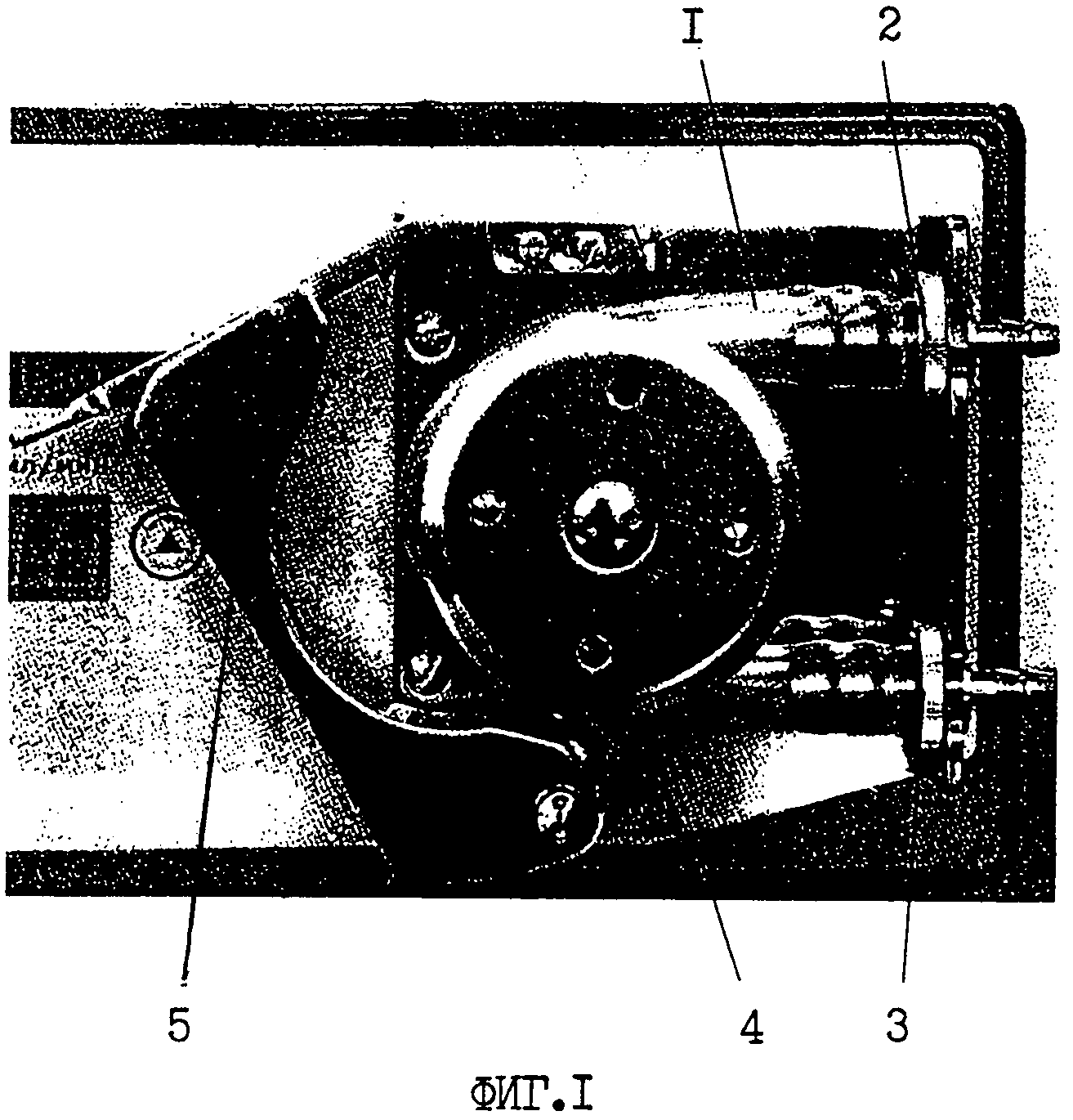
Fig. 1 shows the part of the apparatus that delivers the treatment fluid in pulses. Two rotating rollers alternately compress the silicone delivery tube to propel the fluid.
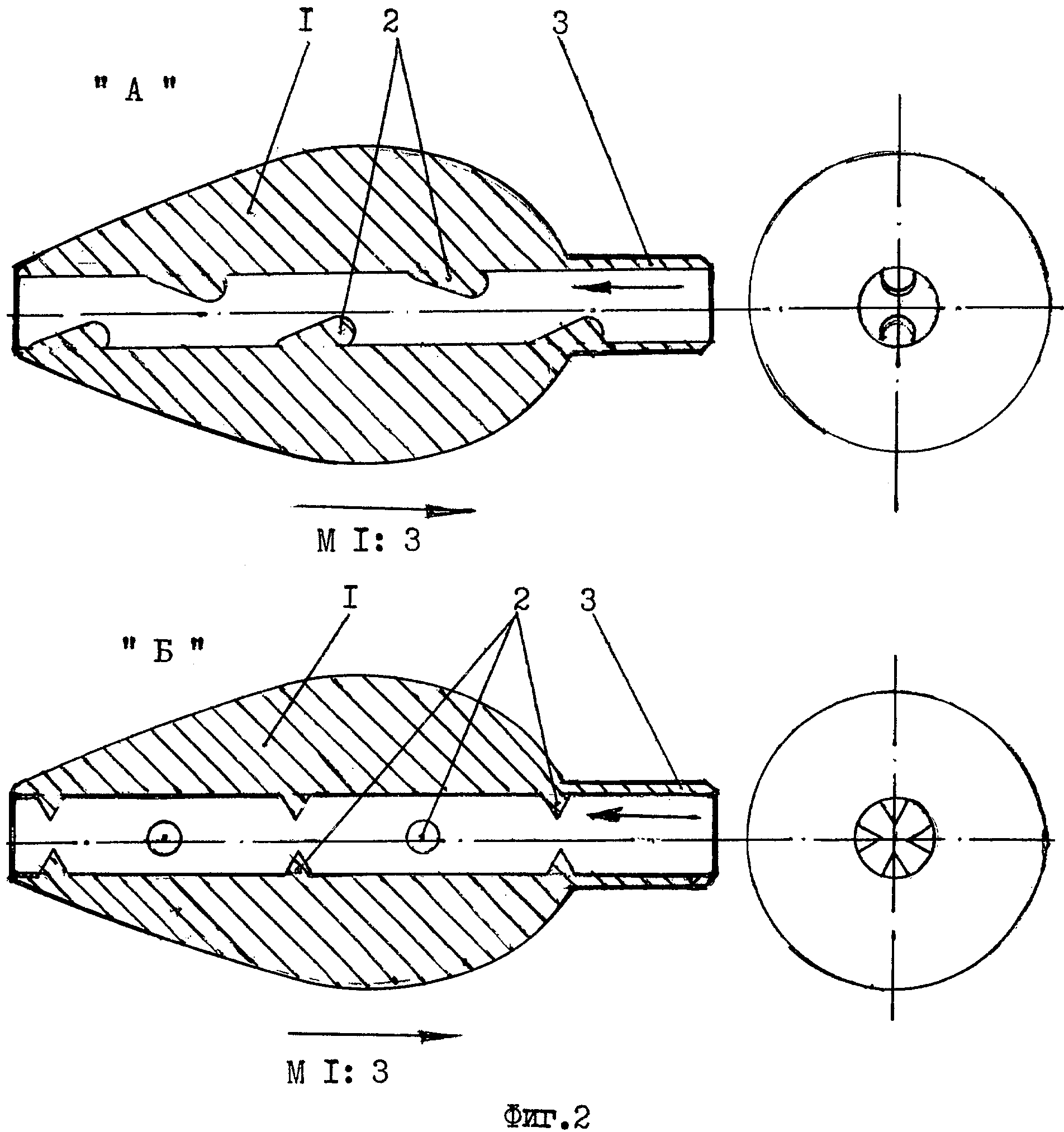
Fig. 2 shows the nasal cannula with two possible designs for the elements that generate turbulence in the treatment fluid. View А shows teardrop-shaped elements and view Б shows pointed elements.
The modified pump assembly in Fig. 1 comprises delivery tube 1, outlet fitting 2 for connection by tubing to the nasal cannula in Fig. 2, and inlet fitting 3 for connection to the treatment fluid container via the administration set and its clamp. A drum carries two rollers 4. Retracting pressure member 5 allows delivery tube 1 to be replaced.
The upgrade of the injection node is done by reducing the roller-squeezing roller rollers 4, From four to two, it is not a simple quantitative change but it provides a new quality - a clear pulsation of the current of the therapeutic fluid, increasing the treatment effects on the surface of the floor and optimal 1-The delivery of the therapeutic fluid is not canfort, but rather at the time of the blow 4-x less effective laminar-pushing without pulsation.
The nasal cannula in Fig. 2 incorporates elements that generate turbulent flow in the treatment fluid. It comprises body 1, flow elements 2 and inlet fitting 3, which connects to outlet fitting 2 of the pump assembly shown in Fig. 1. The cannula implements the proposed method by creating turbulent flow in the treatment fluid delivered into the nasal cavity.
The proposed method is implemented as follows.
In the method described in the patent, inlet fitting 3 is connected via the administration set, with its clamp closed, to a container of treatment fluid positioned at least one metre high. Silicone tubing connects delivery tube 1 via outlet fitting 2 (Fig. 1) to the nasal cannula shown in Fig. 2, which is placed in one nostril. The patient sits with the head inclined over a basin. The apparatus is switched on at the selected flow rate to irrigate that side through the cannula. The clamp is then closed to interrupt flow. If irrigation of the other side is required, the cannula is repositioned, the clamp reopened and irrigation repeated on that side. The treating physician prescribes the flow rate, number of procedures and duration for the individual patient using the instrument controls.
Example 1. The patient with sharp or sharp chronic sinusitis is in a comfortable position before the sink. The head must be tilted forward and slightly turned away opposite to the face. Activate the machine and insert the bow to the nostril. Then open the system shutter and activate the supply unit 0.9% The patient must breathe deeply and hold his breath before washing. When the closure is closed, the treatment fluid is stopped and the liquid stops coming out of the opposite nostril, the canal is removed, the patient is not changing his position, he faints, and the residues of the washing fluid are removed from his nose. The other half of the nose and its slabs are washed in the same way. The washing is performed 1 once a day during the 7 Days with expenditure 100 mL 0.9% One-way saline. To treat inflammatory processes, the type of fluid treated and its volume determined by the treating physician on a case-by-case basis.
Example 2. During the post-op period, the washing shall be done as well as by example 1, with patient training, apparatus, delivery system 0.9% Physically soluble 3 day after operation 1 Once a day, and the duration of the procedure is determined by the individual doctor, taking into account the complexity of the operational intervention and the condition of the patient.