Application: 2002125436/14, 2002.09.20
Date of commencement of report of patent validity: 2002.09.20
Date of application: 2002.09.20
Published: 2004.02.10
Authors: Gubaidullin A.R., Gabitov N.A.
Patent holders: Society with limited liability Endomedium +" (RU)
Documents cited in the search report:
RU 93037820/14 A, 20.03.1996. SU 667203 A1, 25.06.1979.
SU 1834651 A3, 15.08.1993. DE 602907 A, 22.10.1934.
Reference: RU2223053C1_20040210.pdf
Abstract
The invention is a surgical tool and is intended for use, in particular, in the endoscopic surgical The needle holder contains jointed branches with ring handles and cremallera. The arms are connected to the sponges through the tube body and the traction that is located in the shell. One sponge is clinoid with a compressed radius surface. The working surface of the other sponge has a longitudinal support depth of the trapezy shape, the depth and width of the longitudinal support is the radius of the curved surgical needles. As a result, a reliable, oriented fixation of the curved needle is provided and the tool sponges and needles are removed from the tool are broken and the needle they clamped are removed. 1 C.E.P, 2 IL.
Pictures
Formula of invention
1. Surgery holder, containing jointed braces with ring handles and cremallera connected through a tube body and a traction set with sponges, with one sponge having a clinking shape with a radiused surface and the working surface of the other sponge having a longitudinal support depth of the trapezylike shape, the depth and width of the longitudinal support depth being the radius of curved surgical needles.2. Iglo Holder c) The Committee's recommendations.1, different from the sponge working surfaces having a permeation or solid-alloy component.
Description
The invention is a surgical tool and is intended for use in surgical and, in particular, surgical instruments endoscopic surgical Operations.
It is known that the agglomerator is used as a holding device Surgical pinches, captures or clamps, Endo-surgery (DUFNER Journal" 1993 g., c. 9, 22). These tools are not suitable for curved needles because they do not provide a reliable fixation and required orientation.
Known acglode holder a.s. 1251885 from 23.08.86, B.B 31, which is the normal surgical pins, the working surfaces of the sponges are made by a radius-bulb at one and radius-wrapped at the other, which allows the curved needles to be closed. This is a fixed bar on the upper sponge for additional fixing of the curved needle endoscopic surgical Operations.
Another needle holder, described in Inventor’s Certificate No. 1509050, classification A61B 17/00, consists of two pivoted shanks with finger rings at one end and jaws at the other. A ratchet maintains the closing force of the shanks and jaws. It is a conventional surgical clamp for open procedures and can exert considerable clamping force. One jaw carries a projection of varying cross-section. The other has a corresponding groove with clearance between the two surfaces. This arrangement grips the needle along the full length held between the jaws. However, the needle can still slip in the clearance between the projection and the groove if clamping force decreases even slightly, if considerable force is required to pierce the tissue, or if the jaws become misaligned.
This agglomerate is constructive and not applicable in principle endoscopic surgical operations in general, since endoscopic surgical The instrument has a minimum and strictly limited diameter of the troakar, the dimensions and conditions of operation, where the working sponges of the instrument inserted through the troacar are located inside the body and the controls are the external handles and are connected to the sponges of the traction in the tubular shell, which transmits the compression or sponge-pressing force, which is limited and limited, has a different principle and cannot be compared to the normal clamp, whose force depends only on length and strength (thickness) Ranshes.
Use of the known principle in the endoscopic surgical The tools, as demonstrated by the practical testing, do not provide a reliable fixation of the curved needle.
Known as a prototype of a surgical surgical holder on request 93037820/14 from 23.07.93, B.B 8 from 20.03.96, One of the sponges of the instrument has a longitudinal projection, and the other is a longitudinal through-the-board cut that includes part of the sponge without a cut.
This tool is not intended for endoscopic surgical The end of a fork-shaped sponge formed by a longitudinal through-the-slice, if the surgeon wishes to close the curved needle, will seek to separate from the wedge effort transmitted through the curved curved needle with the sponge entering the slit and the greater the force the surgeon puts on the syringe, the more likely it is to break the ends of the wobbly sponge or the needle itself.
The essence of the proposed endo-surgery invention is expressed by the following set of essential features, which provide a reliable and focused fixation of the curved needle but exclude the breakage of the sponges of the tool and the needles they clamp.
This is achieved by one sponge of the tool having a clink shape with a compressed radius surface, and the other sponge having a longitudinal support depth of the trapezyoid or rectangular shape, the width and depth of which corresponds to the radius of the curved needles used in the instrument used (Diamond) the component which increases friction and therefore the effect of locking and clamping the curved needle.
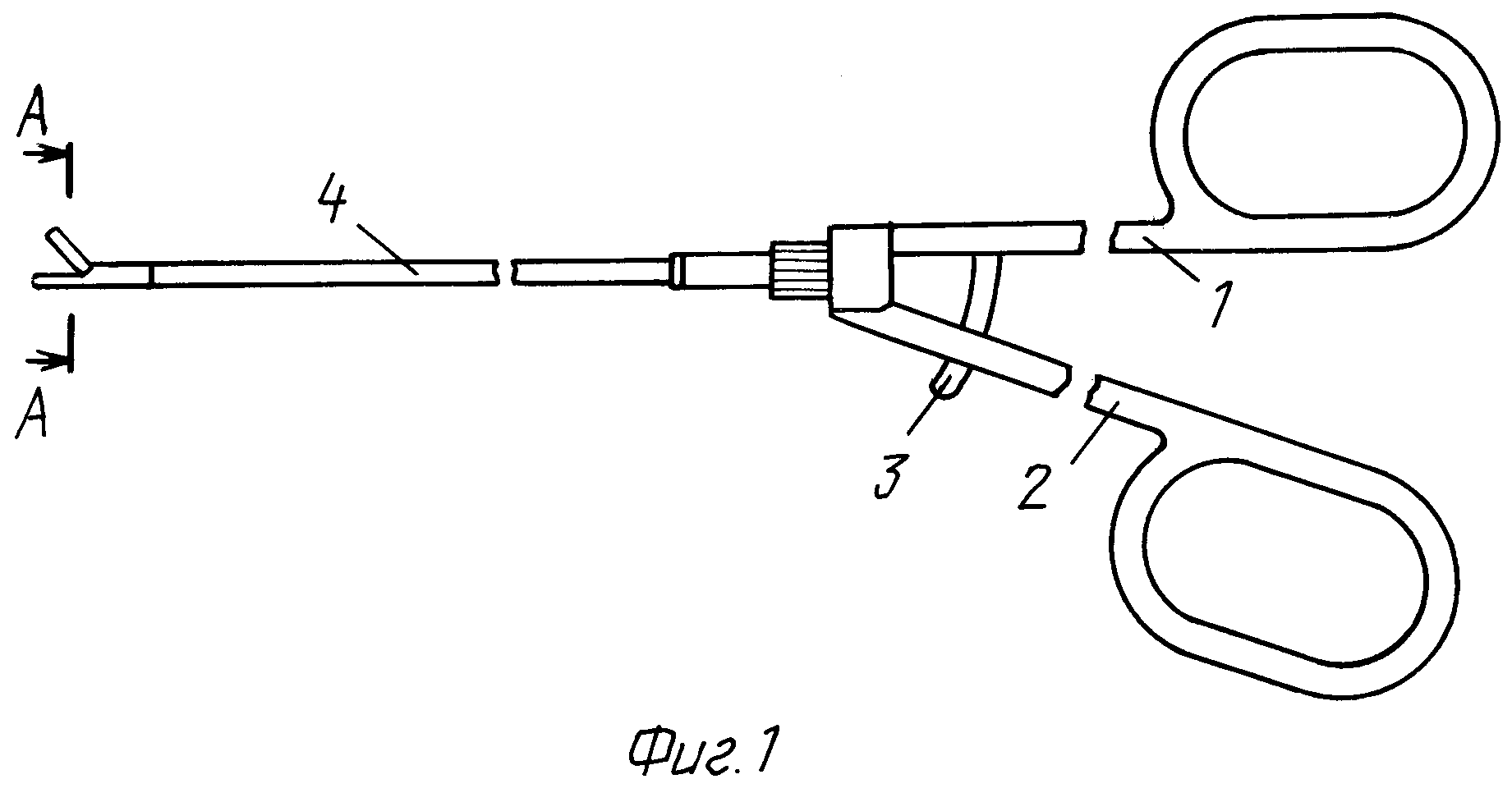
Fig. 1 shows a general view of the surgical needle holder.
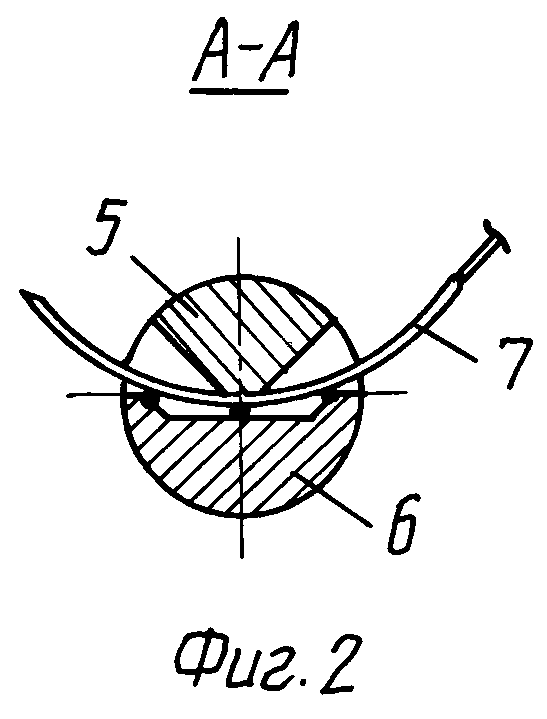
Fig. 2 (section А–А) shows the position of the needle holder jaws as they close. It illustrates how the jaws orient the curved needle in the working position and hold it securely.
Iglo Holder in Figs. 1 and 2 comprises shank 1 and shank 2, which are hinged together and linked by ratchet 3. Shank 1 connects to the removable tubular body 4. A rod within tubular body 4 links shank 2 to jaw 5, which is pivoted to jaw 6. The two jaws orient and securely hold curved surgical needle 7. Jaw 5 has a wedge-shaped cross-section and a curved gripping surface, which may be serrated or have a hard, diamond-bearing surface. Jaw 6 has a longitudinal support groove of trapezoidal or rectangular cross-section. Its surface also has a hard, diamond-bearing component. Its depth and width correspond to the radius of the curved surgical needles used.
The surgical needle is operated as follows 7 in the divorcing position of the sponges 5, 6 seized by compression of the jaws 2, connected by traction through the tube body 4 with sponges connected with joints 5 and 6, with clear orientation of the needle position 7 On the edges of the sponge 6, and, if applied, the force of compression of the sponges shall be secured and the needle pressed to the support surface of the sponge depth 6 pressurised surface of the sponge 5. Force applied and position of the wrestler 1 and 2 recorded by cremaller 3, ensuring that the necessary actions are taken by the carbon holding device in compliance with the endoscopic surgical the selection of the agglode holder and the corresponding needles is consistent with the diameter of the Troakara.